
Last Updated March 9, 2026
For several years, invoice factoring has been closing the small business financing gap. Sometimes, however, businesses need to switch factoring companies. Whether it’s due to funding limits, poor customer service, or a complicated process, businesses switching factoring companies is quite common.
Some might wonder if selling invoices to two factoring companies can be an alternative. As great as this may sound, you cannot have more than one invoice factoring company at a time.
This article will help you understand why you can only have one factoring company at a time and how you can switch invoice factoring companies if you would prefer to work with a different factor.
Can You Work With Two Factoring Companies at Once?
No, you cannot work with two factoring companies at once. There might be a need to change your current factoring company if you’re not satisfied with their services. If that’s the case, you’ll have to exit your factoring agreement and look for a new factoring partner.
Working with two factoring companies at once can be unethical, and even though it’s not always illegal (unless you fraudulently sell the same invoices to two different factors), it’s often written in factoring contracts. It can also cause complications with the two factoring companies.
There are two primary reasons why you usually cannot work with two factoring companies at once:
- UCC filings
- Factoring contracts
UCC Filings
The UCC, which stands for Uniform Commercial Code, is a regulatory model (often thought of as a set of laws) that manage commercial transactions across the United States. When you are approved to receive funding from a lender, that lender typically files a UCC-1, which essentially states that the lender (referred to as the “creditor”) has a security interest in your company (referred to as the “debtor”). This filing announces that the creditor has a lien on some or all of your company’s assets, meaning if you fail to repay what is owed to the creditor, they have a legal right to seize the assets in question.
According to Stanley DeWitt, Account Onboarding Coordinator at altLINE, “UCCs get filed for all sorts of things. When a UCC is filed it ensures that the filer has a secured interest on whatever is listed as collateral from the debtor. For example, when we file our UCC against accounts receivables it provides us with a legally recognized claim of the invoices and protects our investment in the event of default.”
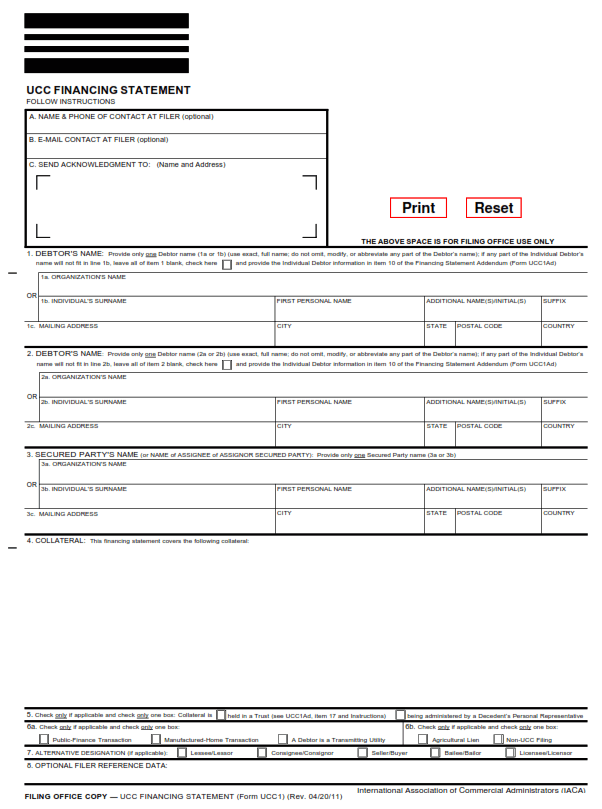
UCC-1 form for Alabama
While multiple lenders can file UCCs on a single company, the order in which these are filed makes a big difference. The first to file a UCC-1 receives the first-position lien, meaning they are first in line to access the company’s assets if it were to default. Other lenders can take a second-position or even a third-position lien, but many will not do so because they do not want to take on the greater risk.
Because lenders typically do not like to have a second-position lien, you will find it is difficult to get multiple factoring companies to work with you at one time because one of them will always have to assume a greater risk of non-payment.
Stanley Dewitt, altLINE Account Onboarding Coordinator, goes on to explain this further. “A factor needs a sole secured interest in all receivables to insure against the advances they send to the client.”
Factoring Contracts
Oftentimes, you will find that factoring contracts include language that prevents a client from working with multiple factoring companies. This contractual obligation is typically included for two reasons:
- To reduce the risk of non-payment to the factoring company
- To avoid the purchase of fraudulent invoices
While the first point is covered above in the explanation of how multiple UCC filings can increase the risk of non-payment, the second point has more to do with the factoring company’s desire to avoid unnecessary legal headaches.
A client can only sell an invoice to a single factoring company; however, some shady clients may try to get double the cash by illegally selling a single invoice to multiple factors. When a business tries to sell the same invoice multiple times, it is committing fraud, so many invoice factoring companies will write into their contracts that you can only work with a single factor to avoid this risk.
How Do I Switch Factoring Companies?
If you realize that your current factoring company is not meeting your business expectations, it may be time to switch to one that can serve you better. Switching invoice factoring companies requires you to conduct thorough research on the best exit strategy by looking at the termination conditions in your contract. These conditions may include a termination notification period or termination fees, and you will have to follow the specified process before you can switch to another company of your choice.
To switch factoring companies, you’ll first want to consider and do the following:
Understand the Cost of Termination
Start by reviewing your current factoring agreement to determine the cost of ending the contract early. Some factoring companies charge termination fees or require you to meet minimum volume commitments before exiting. You should also check for any outstanding balances, reserve amounts, or administrative fees that must be settled. Understanding these costs ahead of time helps you decide whether switching factoring companies is financially worthwhile.
Fulfill the Specified Agreement Terms
Most factoring agreements outline a specific process for termination. This often includes providing written notice within a set timeframe, such as 30, 60, or 90 days. During this period, you may still need to factor invoices or settle remaining obligations with the company. Following the contract terms ensures a smooth exit and helps avoid delays or disputes.
Terminate the Existing UCC Filing
Factoring companies typically file a Uniform Commercial Code (UCC) lien on your receivables when the agreement begins. Before switching providers, that UCC filing must be released. In many cases, the new factoring company can help coordinate the termination once you are approved, but the release must happen before a new UCC filing is made.
Research and Select a New Factoring Company
Once you understand your exit process, you can start evaluating new factoring providers. Look for a company that offers competitive rates, flexible contract terms, and experience working with businesses in your industry. Taking time to compare options can help you choose a factoring partner that better supports your cash flow needs.
How Do I Choose the Best Factoring Company?
Now that you know why you can’t work with more than one factoring company at once, you need to choose the right factoring company that suits your business needs and long-term goals. Different factoring companies have different contract terms, such as factoring fees, payment/contract duration, and funding limits. To choose the right fit for your business, it is important to consider details like:
Source of Funds: A factoring company’s source of funds can impact their factoring fees and how quickly they can send you a cash advance. Factoring with a bank like altLINE means you avoid working with a middleman, resulting in lower factoring fees, faster funding periods, and greater transparency.
Expertise: How long has this factoring company been in business? Do they have more success with businesses in your industry? Knowing the expertise of the factoring company you want to work with provides stability for not just your business but your long-term goals as well.
Customer Relationship: Experience in both customer relations and clientele support is an important requirement for a professional factoring company. Since invoice factoring can affect your customer relationships, it is best to work with a company that has your interests and that of your customers as the central focus of their operations. This will help you retain the trust and loyalty of your customers.
Need to Switch Factoring Companies? Give altLINE a Call
altLINE is a top-rated factoring company that doubles as a bank, so you can receive lower rates and greater transparency during the factoring process. Our team also has more than 80 years of experience serving customers, and we have an A+ rating by the Better Business Bureau.
At altLINE, we want to help your business succeed by providing the working capital you need to grow your company. To see how we can help your business get the funding it needs, give us a call at (+1) 205-607-0811 or fill out our free factoring quote form and we will be in touch shortly.
Switching Factoring Company FAQs
Can you have two factoring companies at the same time?
Generally, no, you cannot have two factoring companies at the same time. Most factoring companies include language in their contracts that prevents clients from working with another factor. They often do this to reduce their own risk of both non-payment and buying fraudulent invoices.
Can you switch factoring companies?
Yes, you can switch factoring companies. However, you’ll need to terminate all previous factoring agreements accordingly. Read more about how to switch factoring companies here.
Can you break an invoice factoring contract?
Yes, you can break an invoice factoring contract provided you understand the cost of termination and follow the process laid out in the agreement.

Deborah Sabinus is a content marketing writer who works across B2B SaaS and Finance industries. She specializes in bridging the gap between businesses and their audience through content. She is committed to helping readers understand complex topics and help them make informed decisions with content.